ABOUT MY WORK

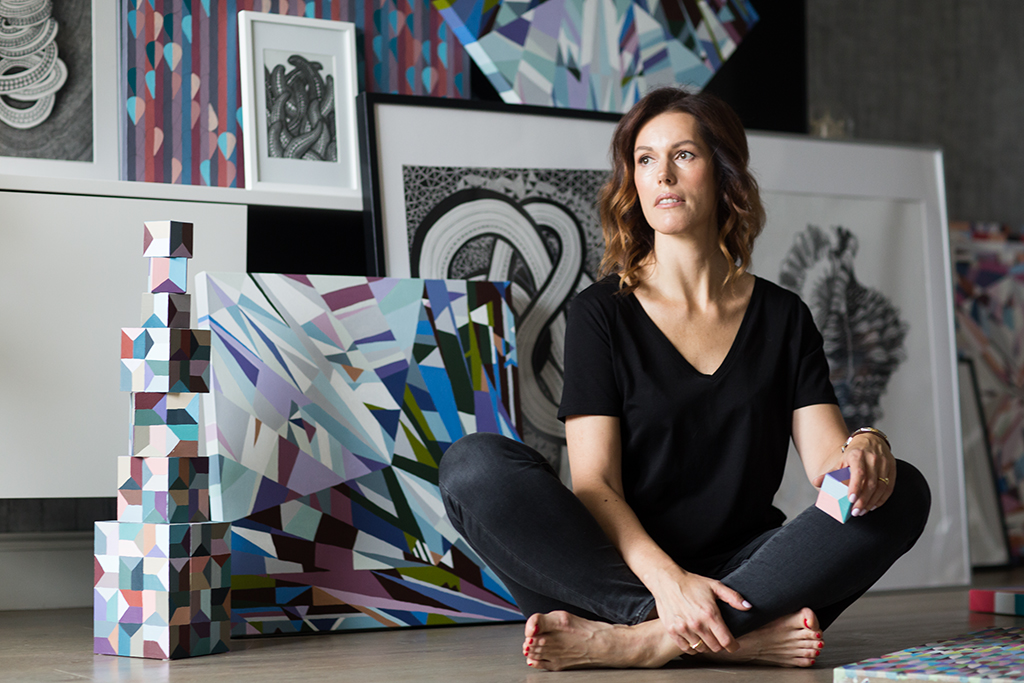
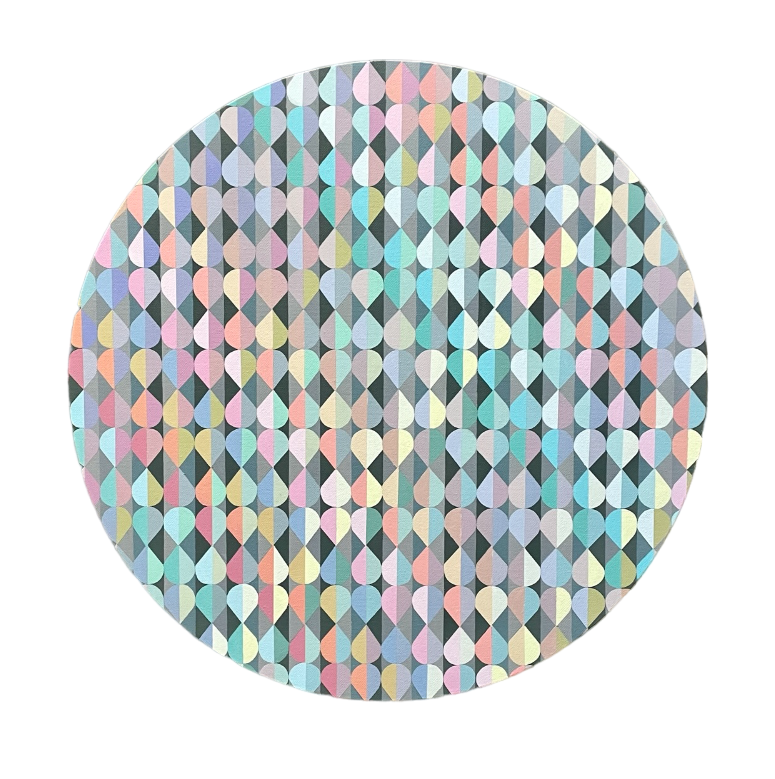
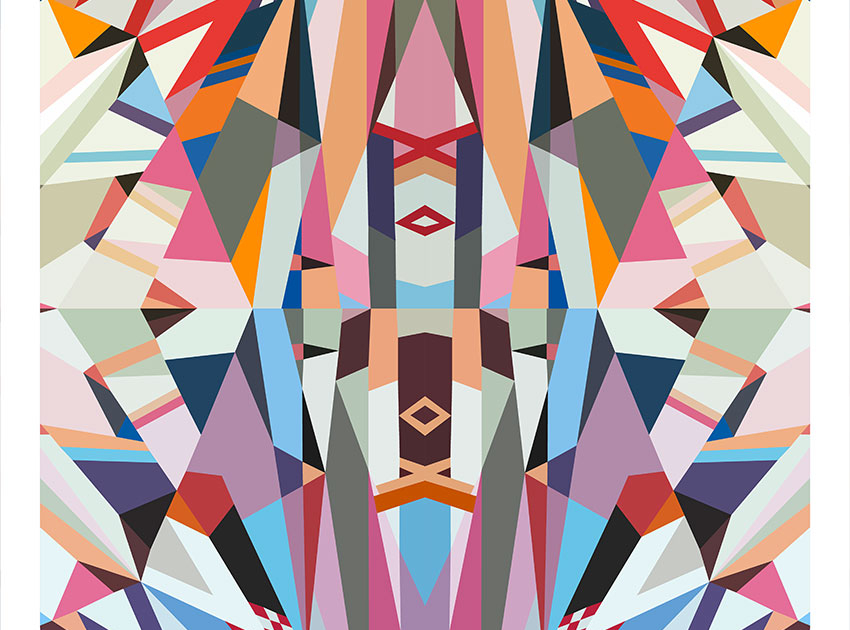
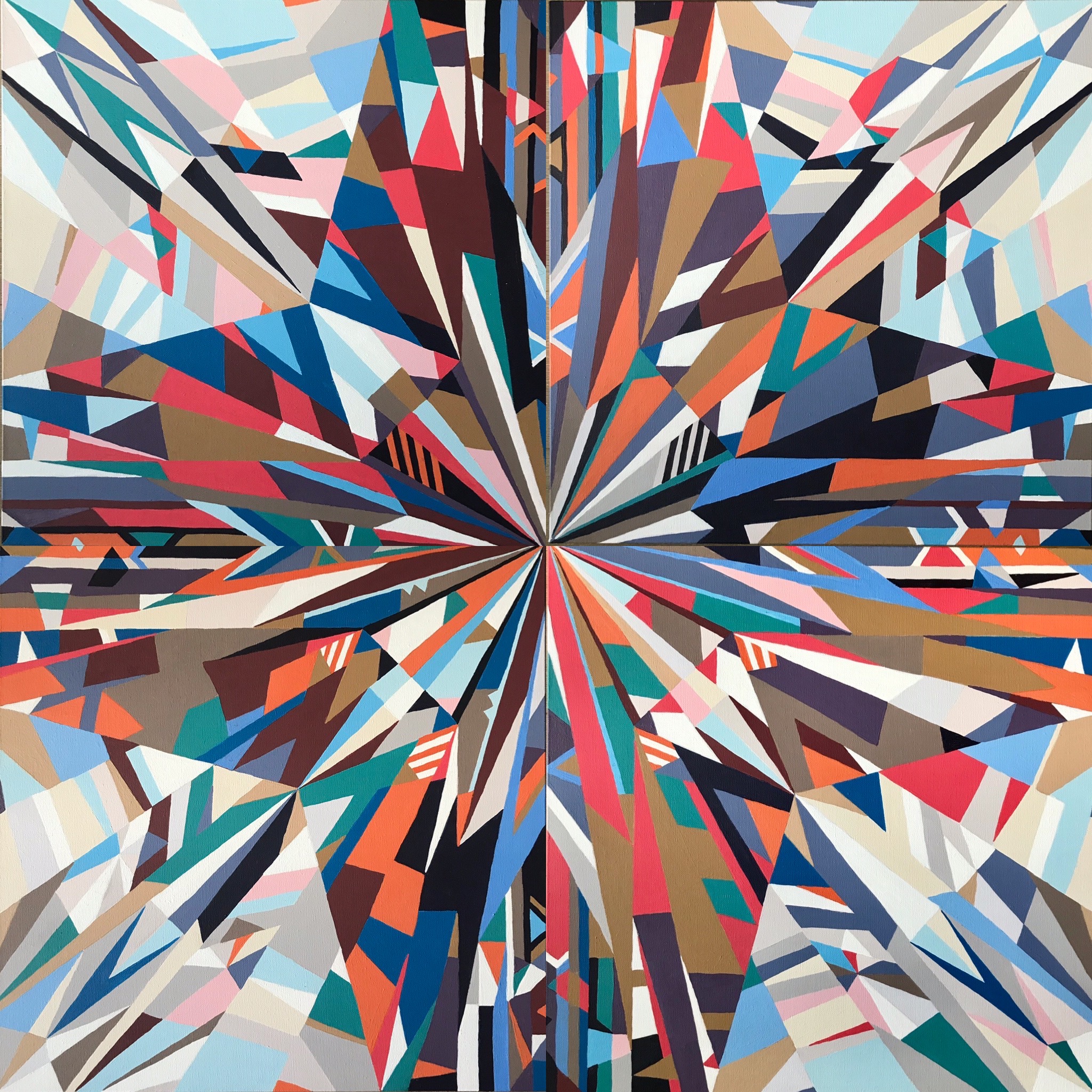
The appeal to abstraction, and especially to geometric abstraction and working with color in the author’s practice, is a universal language and a way of understanding the modern world. Creating one’s own individual structures can, in our time, serve as an inner support for life, a foundation for one’s principles and vision. The author thinks in structures, with the logic of geometric abstraction, because it organizes and harmonizes the world around and within. The author sees structures in crystals, landscapes, and patterns; the basis of the practice is nostalgia for these structures. The author returns to the heritage of the early 20th century—exploring the avant-garde, suprematism, and constructivism, the legacy of VKhUTEMAS and Bauhaus—returning to these sources because, having rejected a mimetic approach to the world, they sought to reveal absolute ideal structures in it. Structuring needs to be restored in our reality through a direct dialogue with Malevich, Kandinsky, Tatlin, and Popova. Appeal to abstraction as an attempt to stop and divide the flow of phenomena, to abstract forms and give them permanence, to ease the agitation caused by the chaos of the external world.

The author adopts this line of structuring the world from artists who inherited the ideas of the avant-garde and were at the origins of our contemporary art in the 1960s-70s — experiments with space and visuality by Ivan Chuikov through fragmenting and recombining the picture of the world, the use of the language of geometry to organize nature in the works of Francisco Infante, ideas of constructing the structure of human emotions, attempts to convey a certain mental and physical state through the formation of structures from lines and spots of different colors and sizes by Yuri Zlotnikov and his “Signal System.” Once again, there is a combination of the cybernetic and the physiological, the scientific and the emotional.

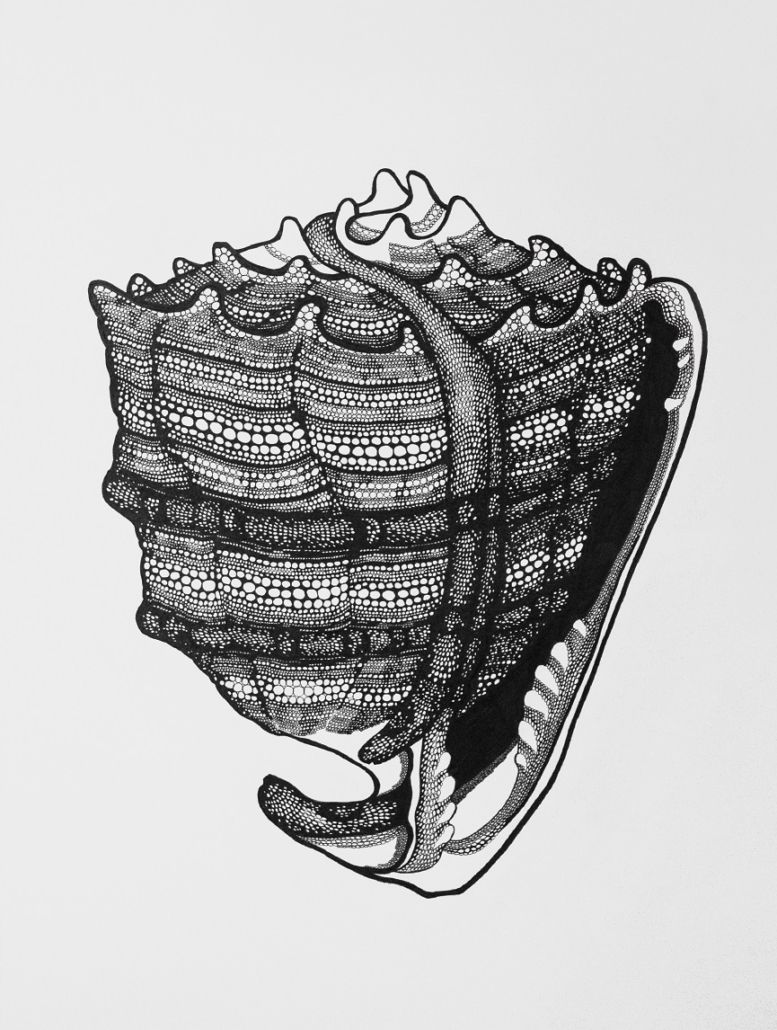
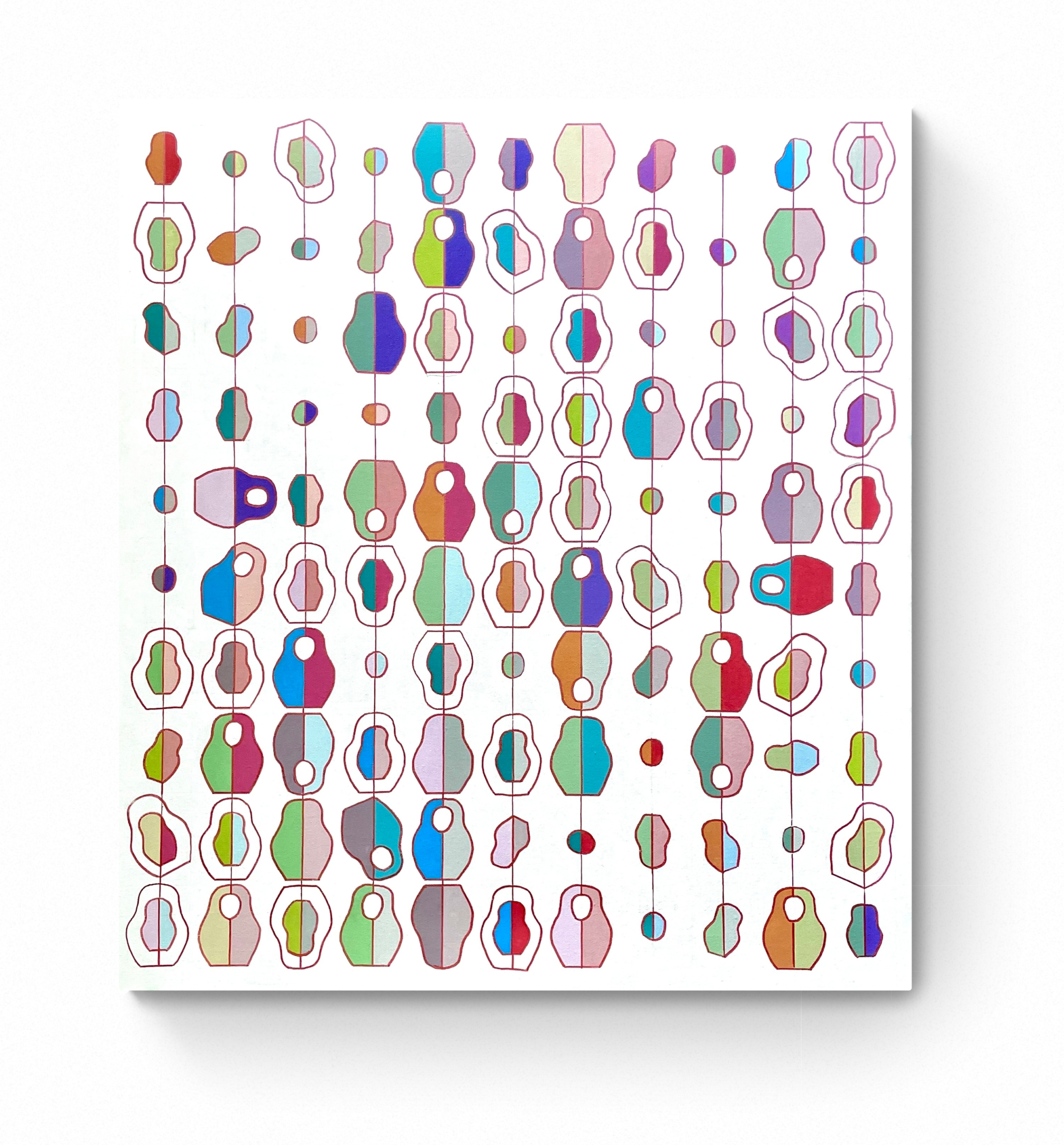
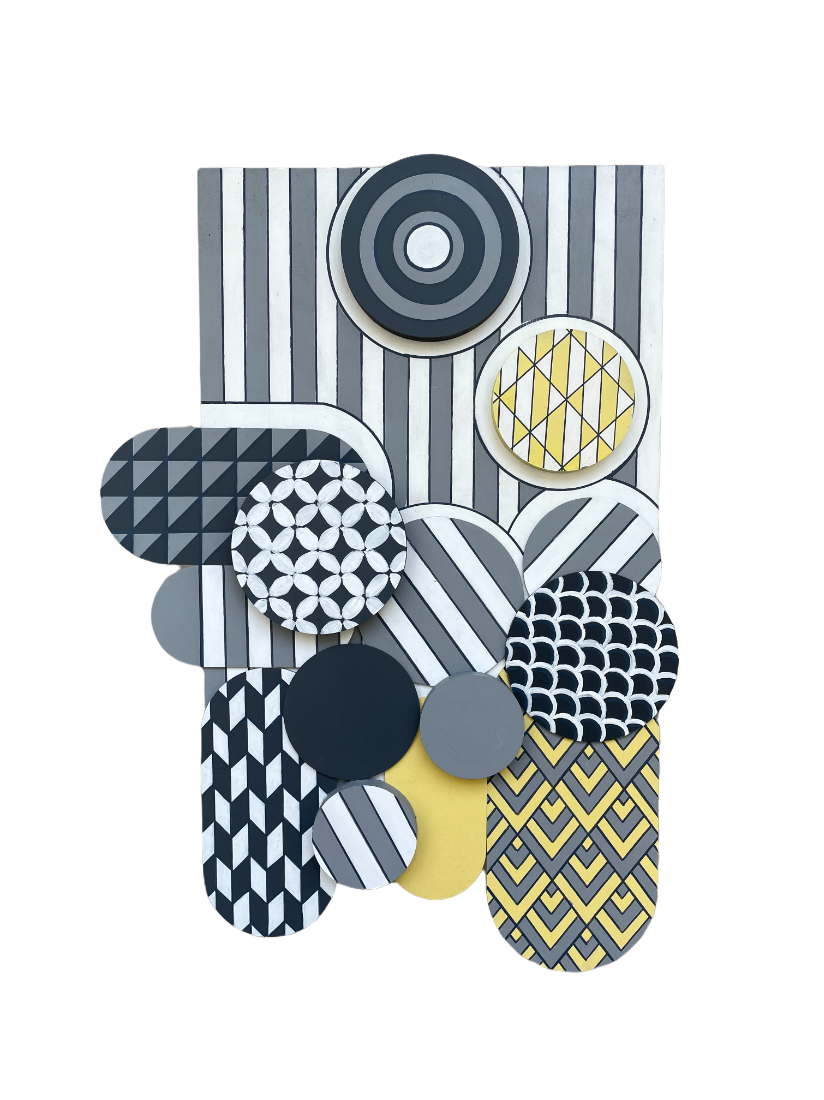
The author creates new worlds in which rigid crystal structures form the volume of spaces where they coexist with biomorphic shapes and ornaments, absorbing their essence and becoming more fluid and pleasing to human perception, continuing to structure natural fluidity, achieving a harmonious synthesis of both states.

The structures in the author’s works are subjected to external influences only to demonstrate their resilience and tendency to restore themselves to their original design. In this way, this structure resists all external effects and gives us a sense of confidence and tranquility.

“…I love working with geometric ornamental abstraction also because it organizes the world around and within me.”

This post is also available in: RUS